


Ajándék
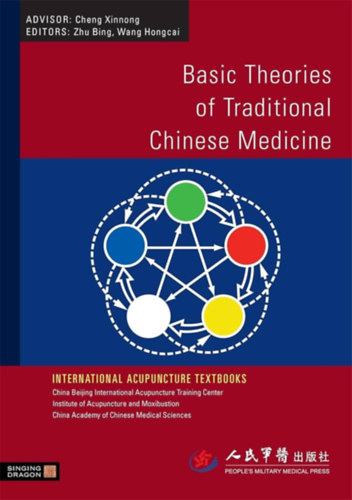
Basic Theories of Traditional Chinese Medicine (A hagyományos kínai orvoslás alapvető elméletei)
Antikvár partner
... | 2010 | papír / puha kötés | 192 oldal

Introduction ........................................................ 15
I. The origin and development of TCM ........................ 16
1. Formation of the theoretical systems of TCM..................... 16
2. Written development of the theoretical systems of TCM .......... 16
II. The basic characteristics of TCM ............................ 18
1. The holistic concept ............................................ 18
2. Treatment based on differentiation of syndromes ................. 19
Chapter 1 The Theories of Yin-Yang, and the Five
Elements .......................................................... 21
I. The Theory of Yin-Yang ....................................... 22
1. The concept and characteristics of Yin and Yang.................. 22
2. Yin-Yang attributes ............................................. 22
3. The basic nature of Yin-Yang.................................... 24
4. Application of the Theory of Yin-Yang in TCM .................. 25
II. The Theory of the Five Elements ............................ 29
1. The basic concept of the Five Elements (Wu Xing)................ 29
2. The nature of the Five Elements ................................. 29
3. Application of the Five Elements in Chinese medicine ............ 35
Chapter 2 The Theory of the Zang Fu Organs .............. 39
I. Brief introduction ............................................. 40
1. The basic concept of Zang Xiang theory ......................... 40
2. Common physiological characteristics of Zang Xiang............. 40
3. The formation of Zang Xiang theory ............................ 42
4. The main characteristics of Zang Xiang theory ................... 42
5. Differences between 'Zang Fu' organs and 'visceral' organs........ 44
II. The five Zang organs .......................................... 44
1. The Heart ...................................................... 45
2. The Lungs...................................................... 47
3. The Spleen ..................................................... 52
4. The Liver....................................................... 55
5. The Kidneys.................................................... 60
III. The six Fu organs .............................................. 64
1. The Gallbladder ................................................ 65
2. The Stomach ................................................... 66
3. The Small Intestine ............................................. 67
4. The Large Intestine ............................................. 67
5. The Bladder .................................................... 68
6. The Triple Burner............................................... 68
IV. The Extraordinary Fu organs ................................. 69
1. The brain ...................................................... 69
2. The uterus...................................................... 69
V. The relationship among the Zang and Fu organs .......... 71
1. The relationship between the Zang organs ....................... 71
2. The relationship between the Fu organs.......................... 79
3. The relationship among Zang Fu organs ......................... 79
Chapter 3 Qi, Blood and Body Fluids ......................... 83
I. Qi ................................................................ 84
1. The concept of Qi .............................................. 84
2. The formation of Qi ............................................ 84
3. The physiological functions of Qi ............................... 85
4. The movements of Qi and the forms of movements ............... 86
5. The distribution and classification of Qi.......................... 87
II. Blood ............................................................ 89
1. The concept of Blood........................................... 89
2. The formation of Blood ......................................... 90
3. The functions of Blood ......................................... 90
4. The circulation of Blood ........................................ 91
III. Body Fluids ..................................................... 91
1. The concept of Body Fluids ..................................... 91
2. The formation, distribution and secretion of the Body Fluids...... 92
3. The function of the Body Fluids................................. 93
IV. The relationships among Qi, Blood and Body Fluids ...... 93
1. The relationship between Qi and Blood.......................... 93
2. The relationship between Qi and Body Fluids .................... 94
3. The relationship between Blood and Body Fluids................. 96
Chapter 4 Meridians and Collaterals .......................... 97
I. Brief Introduction ............................................. 98
II. The concept of the meridians and collaterals and their
composition .................................................... 98
1. The concept of the meridians and collaterals ..................... 98
2. The composition of the meridians and collaterals ................. 98
3. The functions of the meridians and collaterals.................... 101
III. The twelve main meridians .................................. 101
1. The nomenclature of the twelve main meridians .................. 101
2. The regulation of the running courses and cyclical flow of Qi ..... 102
3. Distribution .................................................... 102
4. The cyclical flow of Qi in the twelve main meridians ............. 104
5. Exterior-interior relationships................................... 105
6. The courses of the twelve main meridians ........................ 105
IV. The eight extra meridians .................................... 111
1. Concept........................................................ 111
2. Function ....................................................... 111
3. The Governor Vessel ............................................ 112
4. The Conception Vessel .......................................... 112
5. The Thoroughfare Vessel........................................ 113
6. The Belt Vessel ................................................. 113
7. The Yin Heel and Yang Heel Vessels ............................. 114
8. The Yin Link and Yang Link Vessels ............................. 114
V. The divergent meridians, collaterals, muscle regions and
cutaneous regions ............................................. 115
1. The concept, running course and function of the divergent
meridians ...................................................... 115
2. The concept and function of collaterals .......................... 116
3. The concept and function of the muscle regions .................. 116
4. The concept and function of the cutaneous regions ............... 116
Chapter 5 The Aetiology and Occurrence of Diseases.... 117
I. Introduction .................................................... 118
II. Aetiology ....................................................... 118
1. The concept and classification of aetiology ....................... 118
2. The concept of the six exogenous factors and their characteristics
in causing diseases ............................................. 119
3. The six exogenous factors ....................................... 120
4. Pestilence ...................................................... 129
5. The seven emotional factors ..................................... 129
6. Irregular food intake, overstrain and stress, or lack of physical
exercise ........................................................ 131
7. Traumatic injuries............................................... 133
8. Stagnation of Phlegm or Blood.................................. 134
III. Principles for the onset of diseases ......................... 138
1. Basic principles for the onset of diseases ......................... 138
2. The environment and the onset of diseases ....................... 139
Chapter 6 Pathogenesis........................................... 143
I. The prosperity and decline of pathogenic Qi and
antipathogenic Qi ............................................. 144
1. The prosperity and decline of pathogenic Qi and antipathogenic Qi 144
2. The transformation of the disease ................................ 145
II. Disharmony of Yin-Yang ....................................... 146
1. Concept........................................................ 146
2. Excess of Yin-Yang ............................................. 146
3. Deficiency of Yin-Yang ......................................... 147
4. Mutual consumption of Yin and Yang ............................ 149
5. Yin or Yang kept externally...................................... 149
6. Collapse of Yin and collapse of Yang............................. 150
III. Dysfunction of Qi and Blood ................................. 150
1. Deficiency of Qi ................................................ 150
2. Disturbed Qi activity............................................ 151
3. Deficiency of Blood............................................. 153
4. Stagnation of the Blood......................................... 154
5. Heat in the Blood............................................... 154
6. Dysfunction of Qi and Blood.................................... 154
IV. Disorders of Body Fluid metabolism......................... 156
1. Insufficient Body Fluid .......................................... 156
2. Disturbance in the distribution and excretion of Body Fluid....... 157
3. The relationship between Qi, Blood and Body Fluid.............. 158
V. Interior pathogenic factors .................................. 159
1. Stirring up of interior Wind ..................................... 160
2. Production of interior Cold ..................................... 161
3. Production of interior Damp .................................... 162
4. Dryness due to overconsumption of Body Fluid .................. 163
5. Generation of interior Fire ...................................... 164
VI. Pathogenesis according to the meridians and collaterals 165
Chapter 7 Prevention of Diseases and Principles of
Treatment........................................................... 167
I. Prevention ...................................................... 168
1. Concepts and principles of treatment ............................ 168
II. Principles of treatment....................................... 170
1. Setting up the principles of treatment ............................ 170
2. Application of the principles of treatment ........................ 170
Glossary............................................................... 181
A Brief Chronology of the Chinese Dynasties .................... 185
Bibliography .......................................................... 187
Index .................................................................. 189
+ Mutass többet
- Mutass kevesebbet
Árinformációk
Ingyen szállítás 15 000 Ft felett
Online ár:
4 990 Ft
A termék megvásárlásával
499 pontot szerezhet
Beszállítói készleten
Személyes átvétel 6-8 munkanap
Ingyenes
Házhoz szállítás 6-8 munkanap
15 000 Ft felett ingyenes
| Állapot: | jó állapotú antikvár könyv - aláhúzásokkal |
|---|---|
| Kiadó | ... |
| Kiadás éve | 2010 |
| Oldalak száma: | 192 |
| Súly | 349 gr |
| ISBN | 2310014513792 |
| Árukód | SL#2112587260 |
| Kötés | papír / puha kötés |
Vásárlói értékelések, vélemények
Kérjük, lépjen be az értékeléshez!
Árinformációk
Ingyen szállítás 15 000 Ft felett
Online ár:
4 990 Ft
A termék megvásárlásával
499 pontot szerezhet
Beszállítói készleten
Személyes átvétel 6-8 munkanap
Ingyenes
Házhoz szállítás 6-8 munkanap
15 000 Ft felett ingyenes